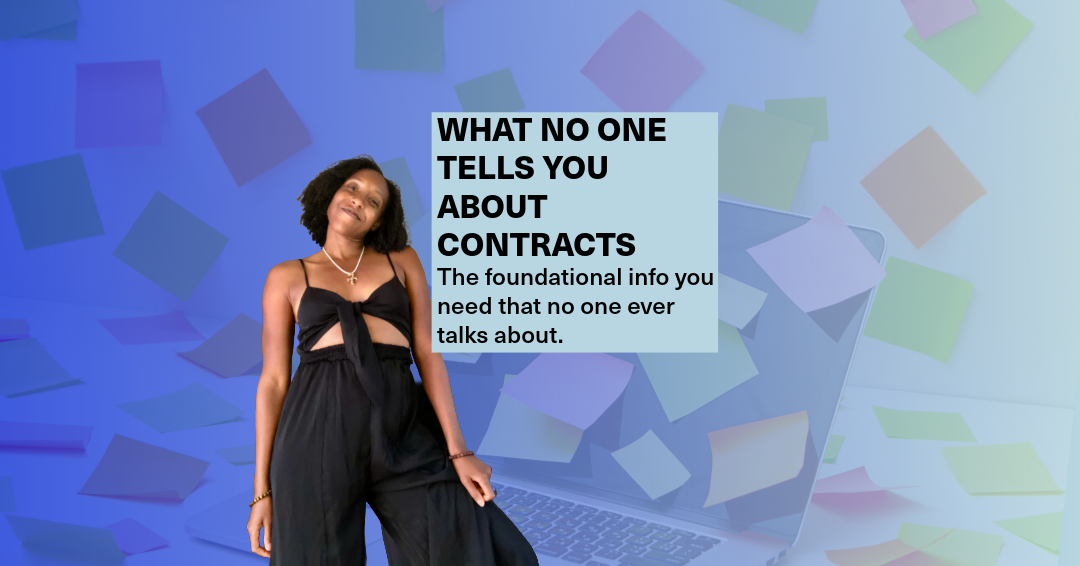
You don’t have to be knowledgeable about the law or proficient at legalese to “get” contracts.
The only thing you need to know is the “how” and the “why” of contracts so that the next time a contract lands in your inbox, you know the basics of how to negotiate it in a professional manner. That way you can get a solid deal in place and focus on doing the work you’re good at. Your other option is to keep doing what you’ve been doing, and we all know that’s not working.
Imagine sitting down to negotiate a client contract with confidence because you know exactly which terms to focus on and how to analyze them instead of signing whatever your client sends just to make them happy.
The difference between where are you now and where you could be is a matter of context. It’s not legalese or the horrible grammar and run-on sentences (though those don’t help!) that make contracts feel impossible to “get”; it’s that you don’t know the context behind why the legalese or run-on sentence is written the way it is and what it’s accomplishing. And without context, words are just words, even if those words are legalese.
So if you’ve been feeling like you simply don’t “get” contracts, that’s normal. Because the things that make contracts make sense are the things that no one ever talks about.
So if you’re tired of feeling like you’re being left in the dark when it comes to contracts, What No One Tells You About Contracts is here to turn on the lights. It tells you the “how” and the “why” behind contracts so you can make sense of any contract put in front of you.
It’s time you understood the “how” and the “why” behind every contract.
It doesn’t matter if you’ve been freelancing for 20 years or 20 days, it’s never too late to “get” contracts so you can finally tick that “figure out contracts” box on your to do list and start prospecting new clients with more confidence.
🫣 Before What No One Tells You About Contracts
🫣 You give up on reviewing the contract because you don't know what legalese means so you just cross your fingers and sign.
🫣 You get frustrated when clients won't budge on terms like indemnity and insurance no matter how hard you push back. Make it make sense!
🫣 You're too scared to ask for changes to your contract because you don't want to risk losing the client.
😏 After What No One Tells You About Contracts
😏 You can look over a contract from top to bottom and know whether your key interests are addressed regardless of whether you have a perfect grasp on legalese.
😏 Your clients’ needs make perfect sense to you and you understand when you can and can’t accommodate them and why.
😏 You feel comfortable negotiating a contract with a potential client because you know that asking to have a conversation doesn’t mean you’re “difficult” to work with.
Here’s all the context you’ve been missing:
module 1: the purpose of contracts
You can't fully understand something if you don't know the purpose behind it. Period. This mini-course starts with me explaining what the purpose of contracts is and what contracts are designed to do. I break down how that purpose plays out in real life so you'll walk away with a tangible framework for understanding any contract put in front of you.
module 2: contracts and project management
Scope creep and project delays aren’t a boundaries issue and working for free is not normal. In this module, I show you how and why you should be using contracts as a project management tool in your business and how much easier they can make it to hold boundaries with your client and charge appropriately for extra work and delays on the project.
module 3: what leverage is and why it's important
Maybe you've never heard of leverage in contracts or you've heard of it, but you're not sure what it means in practice. This section of the course breaks down what leverage is and why it matters for freelancers. I provide real life examples of what leverage in a contract looks like and how it plays out if things start to go south with your client.
module 4: The root of power dynamics in contracts
So many freelancers feel intimated when trying to negotiate with their clients. I breakdown what's actually driving the power dynamics in contracts and how to adjust your negotiation strategy accordingly. The next time you're in an uneven power dynamic, you'll know how to handle it without worrying about whether it will cost you a client.
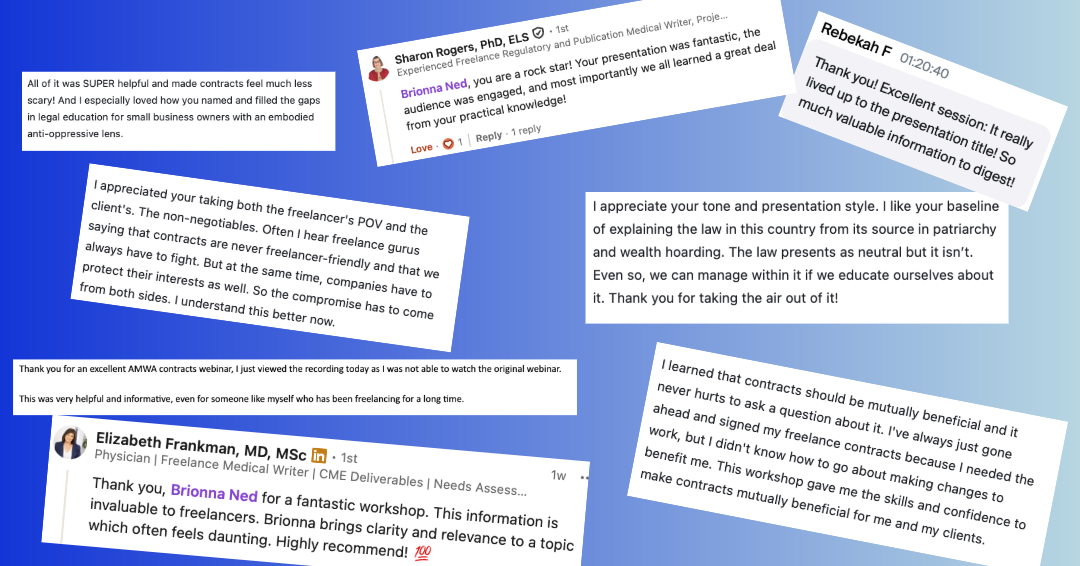
This is BY FAR my most popular introductory offer. Over 100 freelancers have taken What No One Tells You About Contracts and the feedback is ALWAYS the same:

👋🏾 Hi, I’m Brionna
I've been a lawyer for 12 years, but I started my career as litigator. That means I'm used to a good fight. So when I went in-house and got tasked with my first contract review and negotiation, I was ready BABY!
Just like you, I was never taught what contracts are all about. To me, they were just another thing to fight over so that's what I did. It wasn't until my boss explained what we're actually doing when we're trying to strike a deal that I realized I had it all wrong.
Contract negotiation isn't a poker game; it's a conversation about the rules of our engagement. Once I understood that, my approach to contracts and my success in negotiating them did a complete 180.
Here’s what I want you to understand: the answers to everything you need to know about contracts lie in the things people aren’t saying. It's not the legalese or the coveted list of "must have” contract clauses.
It's the stuff no one talks about like the purpose of contracts, risk management, project management, leverage, and power dynamics.
Because that’s the stuff that leads to frank and productive conversations about your clients’ needs and your needs. And that’s what leads to signing deals and starting work together faster.